
 Awarded byGuglielmo Marconi University
Doctorate in Education in Educational Management and Administration
A three-year, fully online doctorate focused on leadership, policy and organisational effectiveness — addressing real-world challenges in managing and transforming educational institutions.
Program Overview
The Doctorate in Education (EdD) in Educational Management and Administration is a three-year, fully online doctoral programme that integrates rigorous academic inquiry with applied professional practice. Designed for experienced educators, academic leaders, and education professionals, the programme supports candidates in deepening their expertise while leading meaningful improvement across educational institutions, systems, and communities.
The programme focuses on leadership, policy, and organisational effectiveness in education through doctoral research that addresses real-world challenges in managing and transforming educational institutions.
Delivered through a research-intensive and professionally relevant learning framework, the doctorate strengthens advanced research capability, analytical thinking, digital and technological literacy, and transformational leadership competence. Candidates develop a deep understanding of the intersection between education, communication, and technology, enabling them to respond effectively to the evolving demands of education in a global context.
Who is it for?
- Experienced educators deepening their expertise
- Academic leaders driving institutional improvement
- Education professionals with senior management experience
- Master's graduates pursuing applied doctoral research
What each module covers
Expand any module to read its description and intended learning outcomes.
Year 1
60ECTSModule Description
This course equips research scholars with comprehensive knowledge and understanding of educational research designs and methodologies. It provides a strong theoretical foundation for conceptualizing, designing, and conducting rigorous educational research aligned with professional practice and policy priorities. The course enables learners to critically examine ethical considerations applicable across diverse research contexts. Learners will develop the ability to evaluate the rigor, strengths, and limitations of diverse methodologies relevant to the field of education. Emphasis is placed on identifying researchable gaps in educational management and related domains, thereby fostering an informed understanding of priority areas for educational research and scholarly inquiry.
Learning Outcomes
At the end of the module, the students should be able to:
- LO1Critically examine key factors that help in identification of researchable gaps in the field of education and strengthens the focus on problem statement.
- LO2Exhibit a comprehensive understanding of various research designs, methodological approaches and critically evaluate their application, strengths, and limitations in educational research and professional practice.
- LO3To demonstrate advanced ability in analysing secondary research using scoping review, systematic review, and meta-analytic methodologies with rigor and transparency.
- LO4Critically examine principles of research quality, including validity, reliability, and ethics, and their application to rigorous and ethical educational research.
Module Description
This module explores the theoretical, methodological, and practical dimensions of generative artificial intelligence (AI) and its transformative potential in educational contexts. Scholars will critically examine research perspectives on generative AI technologies, including their applications in teaching, learning, assessment, and educational innovation. The course emphasizes evidence-informed approaches to integrating AI in education, evaluating ethical, pedagogical, and equity implications, and fostering innovative practices that enhance learning outcomes. Scholars will engage with interdisciplinary research, analyse emerging trends, and develop strategies for designing, implementing, and critically assessing AI-driven educational innovations. By the end of the module, learners will be equipped to contribute to research and critically engage with the effective use of generative AI in education to inform institutional strategies that enhance learning quality, innovation, and organizational effectiveness.
Learning Outcomes
At the end of the module, the students should be able to:
- LO1Critically evaluate theoretical and methodological research perspectives on generative AI in education and innovation.
- LO2Discuss the organizational applications of generative AI across teaching, assessment, and learner support, identifying opportunities, challenges, and evidence- informed best practices.
- LO3Assess the ethical, pedagogical, and equity considerations in the design, implementation, and evaluation of AI-driven educational interventions.
- LO4Propose research based innovative strategies for integrating generative AI in educational contexts to enhance learning quality, foster innovation, and inform institutional decision-making and organizational effectiveness.
Module Description
This course examines diversity, equity, and inclusion (DEI) in education through an applied research lens, equipping students with the knowledge and skills to investigate, address, and respond to systemic inequities in educational contexts. Students will critically analyse how educational systems, policies, and practices contribute to or mitigate structural inequalities using evidence-informed and practice-oriented research approaches. The course emphasizes applied research frameworks related to inclusive education, universal design for learning, and differentiated pedagogies to address learner diversity and special educational needs. Learners will develop competencies in designing, implementing, and evaluating culturally responsive and contextually grounded interventions aimed at advancing social justice and improving educational outcomes, particularly for historically marginalized communities. By the end of the course, students will be prepared to apply research evidence to advocate for inclusive practices and to drive meaningful, data-informed change within educational institutions.
Learning Outcomes
At the end of the module, the students should be able to:
- LO1Synthesize inclusive education frameworks, differentiated instructional approaches, and universal design principles to inform accessible learning environment design.
- LO2Critically examine and apply core diversity, equity, and inclusion concepts to educational institutional contexts.
- LO3Critically analyse diversity, equity, and inclusion challenges in educational contexts by researching about policies, systems, and practices that shape structural inequalities.
- LO4Design and evaluate culturally responsive, evidence-informed interventions that promote inclusion, social justice, and improved educational outcomes.
Module Description
This module examines leadership theories, practices, and strategies that promote sustainable educational development in diverse contexts. The learners will critically engage with concepts of sustainable development, transformative leadership, and systemic change in education, exploring the influence of leaders on policy, institutional practice, and community engagement to achieve long-term educational goals. The course emphasizes evidence-informed approaches to developing resilient, inclusive, and innovative educational organizations, and leaders for education institutions. Scholars will analyse case studies, conduct research-based inquiry, and design strategic initiatives that foster sustainable improvements in educational quality, and institutional effectiveness. By the end of the module, learners will be equipped to provide visionary and research-grounded leadership that advances sustainable educational development at institutional and systemic levels.
Learning Outcomes
At the end of the module, the students should be able to:
- LO1Critically examine and synthesize leadership theories and transformative practices to advance sustainable educational development in diverse institutional and systemic contexts.
- LO2Evaluate the influence of leadership on policy, institutional practice, and community engagement to drive long-term, evidence-informed educational outcomes.
- LO3Analyse the impact of change leadership and management, identifying strategies to maintain the sustainability of educational organizations.
- LO4Demonstrate ability to apply evidence-based strategic initiatives that foster resilient, inclusive, and innovative educational organizations aligned with sustainable development principles.
Module Description
This module equips doctoral scholars with the knowledge and skills for planning, designing, and implementing applied educational research vision. The course emphasizes critical analysis of educational research problems to identify gaps in theory, practice, and policy. Scholars will develop the ability to conduct literature reviews to establish the significance of their research idea, if any and to construct conceptual frameworks that will help in informing research aims, questions, and objectives. The module also focuses on evaluating and selecting appropriate qualitative, quantitative, and mixed-methods research designs, ensuring methodological rigor and feasibility. Finally, learners will explore strategies for planning, and managing, applied educational research projects, considering practical constraints and effective approaches for disseminating research findings.
Learning Outcomes
At the end of the module, the students should be able to:
- LO1Critically analyse applied educational research problems to identify researchable questions that address gaps in theory, practice, or policy.
- LO2Understand the basics of literature review to confirm on significance of research and develop a conceptual framework that can help to design research aim, question, and objectives.
- LO3Evaluate and select suitable research designs and methods for the identified educational studies, including qualitative, quantitative, and mixed methods approaches, ensuring methodological rigor and feasibility
- LO4Discuss the strategies for planning, managing, and executing applied educational research projects, integrating practical considerations, constraints, and dissemination plans to maximize scholarly and policy impact.
Year 2
60ECTSResearch Proposal Evaluation
20ECTSThesis Progress Review
20ECTSAcademic Publication and Seminar Engagements
20ECTSYear 3
60ECTSThesis Submission
15ECTSFinal Thesis Presentation
15ECTSViva Voce Examination: Thesis Defence
30ECTSHear from our graduates
Educators who took this path, in their own words.
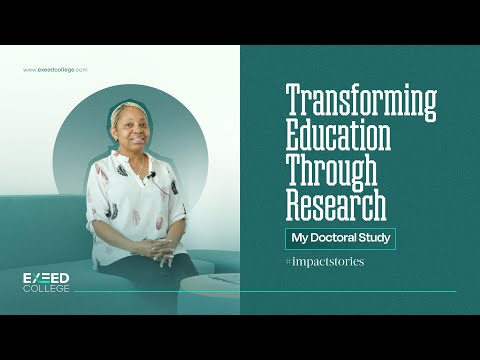 Doctorate
 Jamaica → UAE
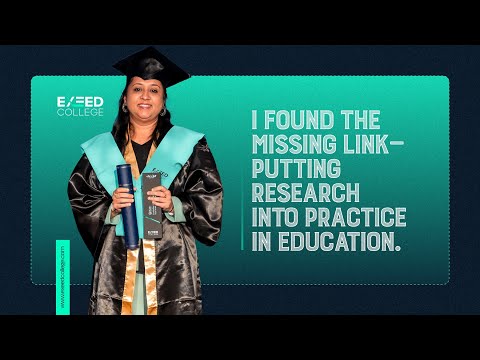 Doctorate
 Singapore
Meet your supervisors
Research and grow alongside an experienced, international panel of doctoral supervisors who guide your thesis from proposal to viva.

















About Guglielmo Marconi University, Italy
Guglielmo Marconi University, Italy
Università degli Studi Guglielmo Marconi, internationally referred to as Guglielmo Marconi University, is the first Italian Open University recognised by the Italian Ministry of Education, University and Research (MIUR).
Guglielmo Marconi University (GMU) promotes the use of innovative learning methodologies and an approach based on the development of interdisciplinary knowledge, skills, and competencies with a particular emphasis on the global perspective. Its diverse community currently has 16,000 students enrolled in graduate and postgraduate programmes, 300 faculty members, and an academic advising team made of more than 200 experts.
Doctorate in Education in Educational Management and Administration
Issued and conferred by Guglielmo Marconi University, Italy on successful completion. Specimen shown for illustration — names and dates appear on the issued certificate.
How to qualify
Eligibility
What you'll need to apply- Candidates must have a Master’s degree in Education or equivalent from a recognised institution.
- Candidates must have at least three years of work experience in Education management experience, at an appropriately senior level.
- English level: 6.0 IELTS or equivalent.

How you'll learn
A flexible, mentor-led online experience — built so busy educators can upskill without a career break.
- Live & interactive lectures by expert faculty
- Recorded sessions for offline viewing
- World-class curriculum by eminent faculty
- Practical learning through seminars & workshops
- Assignments for module assessments
- Easy-to-use LMS, accessible anywhere
- Online library to further enhance your knowledge
- Real-world skills for a well-rounded experience
Where this qualification takes you
Frequently asked questions
It is a three-year, fully online Doctorate in Education focused on leadership, policy and organisational effectiveness. Candidates undertake doctoral research that addresses real-world challenges in managing and transforming educational institutions, rather than studying management theory alone.
EdD stands for Doctorate in Education. This one is awarded as the Doctorate in Education in Educational Management and Administration: a professional doctorate that pairs a taught doctoral year with original, practice-informed research into how educational institutions are led, governed and improved.
Three years, fully online, worth 180 ECTS. Year one is 60 ECTS of taught doctoral modules; year two is 60 ECTS of research proposal evaluation, thesis progress review and academic publication; year three is 60 ECTS, finishing with the viva voce thesis defence.
A Master's degree in Education or equivalent from a recognised institution, at least three years of work experience in education management at an appropriately senior level, and English at IELTS 6.0 or equivalent. An advisor can confirm your eligibility and explain the application before you apply.
Five modules of 12 ECTS each: Educational Research Design and Method; Research Perspectives in Generative AI and Innovation in Education; Applied Research for Diversity and Inclusion in Education; Leadership for Sustainable Educational Development; and the Doctoral Research Proposal, in which you define your own research question and design.
Structure is the difference. This EdD is a professional doctorate: a taught doctoral year first, then practice-informed research into leadership, policy and organisational effectiveness in education. Taito's PhD in Humanities and Social Sciences runs as research planning, supervised research development and a thesis, counted in study hours rather than taught ECTS modules.
The award is the Doctorate in Education in Educational Management and Administration, issued and conferred by Guglielmo Marconi University, Italy, on successful completion. Taito delivers the programme online, with Marconi as the awarding university. Speak to an advisor about how the award fits your plans and how supervision is arranged.