
 Awarded byUniversidad Tecnológica Atlántico Mediterráneo
Doctorate in AI in Education
A doctorate from UTAMED, Spain — researching artificial intelligence in education, from curriculum and assessment to institutional leadership.
Program Overview
The Doctorate in AI in Education is a three-year, fully online programme designed to develop advanced, research-led expertise at the intersection of artificial intelligence and education. It equips doctoral candidates to critically examine, design, and implement AI-driven innovations that transform teaching, learning, assessment, and educational systems.
Rooted in rigorous and ethically informed research, the programme emphasises the creation of original knowledge to address complex educational challenges across global contexts. By integrating technological, pedagogical, and socio-political perspectives, it prepares candidates to contribute to academic scholarship, inform policy, and lead institutional transformation.
Through advanced research and methodological training, candidates explore how AI and emerging technologies are reshaping curriculum, leadership, and strategy in education. Graduates are equipped to evaluate technological trends, navigate ethical and governance challenges, and translate research into impactful, real-world solutions that drive innovation and systemic change.
Who is it for?
- Experienced educators deepening their expertise
- Academic leaders driving institutional improvement
- Education professionals with senior management experience
- Master's graduates pursuing applied doctoral research
What each module covers
Expand any module to read its description and intended learning outcomes.
Year 1
60ECTSModule Description
This module will equip the research scholars with the knowledge and understanding about the designs and conduct of scientific research. It will help in critically examining research paradigms, methodological approaches, and ethical considerations which will enable the scholars to understand the difference between research designs. The students will develop an ability to appraise the rigour and limitations of diverse methodologies, while synthesising insights from published literature to design a vision for their respective research work in the field. The module will emphasize on the importance of ethical practices and quality assurance to generate a remarkable research work.
Learning Outcomes
At the end of the module, the students should be able to:
- LO1Demonstrate a critical understanding of research design fundamentals and methodological approaches, while critically assessing the use, strengths, and limitations of quantitative research in varied domains.
- LO2Critically analyse qualitative and mixed-method research approaches, including their application in varied domains, with attention to data collection, analysis, and reporting techniques.
- LO3Demonstrate advanced ability in conducting and evaluating secondary research through scoping reviews, systematic reviews, and meta-analyses, ensuring rigor and transparency throughout the process.
- LO4Critically evaluate principles of research quality, related majorly to validity, reliability, and ethics, and demonstrate an understanding of their application to rigorous and ethical research.
Module Description
This module critically examines the transformative role of artificial intelligence in curriculum design, pedagogical practice, and assessment systems. It engages students in analysing how AI enables personalised, adaptive, and data-informed learning environments while challenging traditional educational paradigms. Drawing on current research, the module explores the integration of AI into instructional design, automated assessment, and feedback mechanisms, with a focus on enhancing learning outcomes and equity. Students critically evaluate the implications of AI for curriculum coherence, academic integrity, and inclusivity, while designing research-informed models that align technological capabilities with pedagogical principles. The module fosters the development of innovative, evidence-based approaches to curriculum and assessment in AI-enabled contexts.
Learning Outcomes
At the end of the module, the students should be able to:
- LO1Demonstrate a critical understanding of AI-driven approaches to curriculum design and pedagogical innovation using advanced theoretical and empirical frameworks.
- LO2Critically analyse and synthesise research on AI-supported assessment, feedback systems, and learning analytics to inform educational practice.
- LO3Design and justify research-informed instructional and assessment models that integrate AI technologies in diverse learning environments.
- LO4Critically assess the implications of AI for inclusivity, equity, and academic integrity in curriculum and assessment practices.
Module Description
This module offers an in-depth, research-led exploration of generative AI and its transformative potential within education. It examines the theoretical underpinnings and technical architectures of generative models, including large language models and multimodal systems, alongside their applications in content creation, teaching, and assessment. Students critically engage with emerging research to evaluate the pedagogical, epistemological, and ethical implications of generative AI, particularly in relation to authorship, knowledge construction, and academic integrity. The module emphasises the design and evaluation of innovative applications of generative AI in educational contexts, fostering critical awareness of its limitations, biases, and societal impact. It supports students in positioning generative AI within broader debates on the future of education.
Learning Outcomes
At the end of the module, the students should be able to:
- LO1Demonstrate a critical understanding of theoretical, technical, and epistemological foundations of generative AI in educational contexts.
- LO2Critically evaluate emerging research on the application of generative AI in teaching, learning, and assessment, identifying opportunities and limitations.
- LO3Design and justify innovative, research-based solutions of generative AI to address complex educational challenges.
- LO4Critically assess ethical, pedagogical, and societal implications of generative AI, including issues of bias, authorship, and knowledge production.
Module Description
This module examines the strategic and organisational dimensions of implementing artificial intelligence within educational institutions. It engages students in analysing innovation processes, leadership practices, and change management strategies that underpin successful technology adoption. Drawing on research in organisational theory and educational leadership, the module explores how institutions navigate complexity, resistance, and transformation in AI-enabled environments. Students critically evaluate models of innovation and change, considering issues of institutional readiness, stakeholder engagement, and sustainability. The module emphasises the design of research-informed strategies for leading and managing AI-driven change, enabling students to address real-world challenges and contribute to institutional and systemic transformation.
Learning Outcomes
At the end of the module, the students should be able to:
- LO1Demonstrate a critical understanding of theoretical and empirical models of innovation and organisational change in AI-enabled educational contexts.
- LO2Critically analyse institutional factors and cultural theories influencing the adoption and implementation of AI in education.
- LO3Design research-oriented strategies for leading and managing AI-driven transformation in educational organisations.
- LO4Critically assess the effectiveness, impact, and sustainability of AI innovation initiatives within complex educational systems.
Module Description
This module provides a critical examination of the ethical, governance, and policy dimensions of artificial intelligence in education. It explores how ethical frameworks, regulatory structures, and institutional policies shape the responsible use of AI technologies. Students engage with interdisciplinary research to analyse issues of bias, fairness, transparency, accountability, and data privacy, considering their implications for educational equity and social justice. The module emphasises the development of critical, policy-informed perspectives that enable students to evaluate and influence governance practices. Through rigorous analysis, students are equipped to contribute to the development of ethical and sustainable AI policies in education.
Learning Outcomes
At the end of the module, the students should be able to:
- LO1Critically analyse ethical theories and frameworks relevant to AI in education, applying them to complex real-world scenarios.
- LO2Evaluate governance models and regulatory approaches shaping the development and deployment of AI systems in educational contexts.
- LO3Critically assess the implications of AI for equity, inclusion, and social justice, drawing on interdisciplinary research.
- LO4Develop policy-informed, research-based perspectives to support responsible and accountable AI adoption in education.
Module Description
This module develops skills for expertise in conceptualising, designing, and executing applied research. It focuses on the critical examination of research problems to uncover gaps in theory, practice, and policy. Scholars will learn to conduct rigorous literature reviews to justify the significance of their research ideas and to build conceptual frameworks that inform research aims, questions, and objectives. The module also supports the evaluation and selection of suitable qualitative, quantitative, and mixed methods approaches, with an emphasis on methodological rigor and feasibility. In addition, students will explore effective strategies for planning and managing applied research projects, while addressing practical constraints and identifying appropriate ways to communicate research findings.
Learning Outcomes
At the end of the module, the students should be able to:
- LO1Critically examine applied research problems to formulate clear and researchable questions that address gaps in theory, practice, or policy.
- LO2Undertake a literature review process to establish the significance of a study and construct conceptual frameworks that guide research aims, questions, and objectives.
- LO3Demonstrate a critical understanding of choosing appropriate research designs and methodologies for the identified research, including qualitative, quantitative, and mixed methods approaches, ensuring rigor and practical feasibility
- LO4Develop well-structured and original research proposals that demonstrate strong methodological alignment and meaningful theoretical contribution.
Year 2
60ECTSResearch Proposal Defence
20ECTSThesis Progression and Review Meetings
20ECTSSeminar Participation and Additional Research Engagements
20ECTSYear 3
60ECTSThesis Submission
15ECTSPresentation on Thesis Work
15ECTSThesis Viva Voce Examination
30ECTSHear from our graduates
Educators who took this path, in their own words.
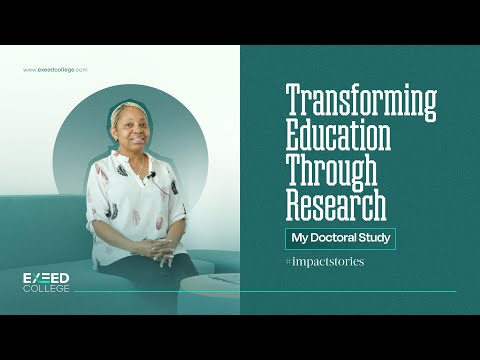 Doctorate
 Jamaica → UAE
 Doctorate
 Singapore
Meet your supervisors
Research and grow alongside an experienced, international panel of doctoral supervisors who guide your thesis from proposal to viva.

















About Universidad Tecnológica Atlántico Mediterráneo (UTAMED), Spain
Universidad Tecnológica Atlántico Mediterráneo (UTAMED), Spain
Universidad Tecnológica Atlántico Mediterráneo (UTAMED), Spain, is a forward-thinking, 100% online university shaped by a spirit of innovation, curiosity, and adaptability. As one of the most reputable educational groups in Spain, UTAMED is built on expertise in both in-person and online education, offering programs that respond directly to the evolving needs of today’s workforce.
Headquartered in Málaga, Southern Europe’s rising tech and innovation hub, UTAMED embraces the dynamic nature of education and the changing global landscape. UTAMED programs are designed to reflect the continuous evolution of knowledge and professional skills.
UTAMED is committed to:
- Delivering skills-based, career-focused education
- Bridging the gap between research, innovation, and industry
- Preparing graduates who are practically equipped and highly employable
- Driving progress in technology, entrepreneurship, education, health, and social impact
It is not only a place of academic learning, it's a space where applied research, business insight, and digital learning come together to shape the leaders and changemakers of tomorrow.
Doctorate in AI in Education
Issued and conferred by Universidad Tecnológica Atlántico Mediterráneo (UTAMED), Spain on successful completion. Specimen shown for illustration — names and dates appear on the issued certificate.
How to qualify
Eligibility
What you'll need to apply- Bachelor’s Degree from a recognized University

How you'll learn
A flexible, mentor-led online experience — built so busy educators can upskill without a career break.
- Live & interactive lectures by expert faculty
- Recorded sessions for offline viewing
- World-class curriculum by eminent faculty
- Practical learning through seminars & workshops
- Assignments for module assessments
- Easy-to-use LMS, accessible anywhere
- Online library to further enhance your knowledge
- Real-world skills for a well-rounded experience
Where this qualification takes you
Frequently asked questions
It is a three-year, fully online research doctorate at the intersection of artificial intelligence and education, awarded by UTAMED, Spain. Candidates critically examine, design and evaluate AI-driven change in teaching, learning, assessment and educational systems, and produce original research on a question of their own choosing.
Three years and 180 ECTS in total. Year one is 60 ECTS across six taught modules. Year two is 60 ECTS: research proposal defence, thesis progression and review meetings, and seminar participation with additional research engagements. Year three is 60 ECTS: thesis submission, presentation of thesis work and the viva voce examination.
Year one has six modules of 10 ECTS each: Research Design and Practices; AI Driven Curriculum, Instruction and Assessment; Generative AI in Education; AI Innovation, Leadership and Change in Education; Ethics, Governance and Policy in AI in Education; and the Doctoral Research Proposal.
The page states a Bachelor's degree from a recognised university. Because doctoral entry also depends on your wider academic and professional background, Taito's advisors confirm eligibility individually before you apply, and can explain which documents to send with the application.
The page describes it as suited to experienced educators deepening their expertise, academic leaders driving institutional improvement, education professionals with senior management experience, and master's graduates moving into applied doctoral research. It is aimed at people who want to research AI in education, not only use it.
Study is fully online. The programme runs live and interactive lectures, recorded sessions for offline viewing, seminars and workshops, module assignments, an online library and an LMS accessible anywhere. A panel of doctoral supervisors guides your thesis from proposal through to the viva.
The award is the Doctorate in AI in Education, issued and conferred by X (UTAMED), Spain, on successful completion. Taito delivers the programme online, with UTAMED as the awarding university. Speak to an advisor about how the award fits your plans.