
 Awarded byWoolf University
Postgraduate Certificate in Education (AI in Education)
A postgraduate certificate from Woolf, Malta — the pedagogy, ethics and practice of artificial intelligence in education.
Program Overview
The Postgraduate Certificate in Education (PGCE) equips educators with both foundational and advanced knowledge of Artificial Intelligence (AI) in education, empowering them to integrate AI into their teaching practices. The 6-month program enhances instructional design and assessment strategies using AI tools, promoting more personalised and effective learning experiences. It focuses on developing leadership skills and ethical responsibility in implementing AI technologies, while exploring innovative approaches like Augmented Reality (AR), Virtual Reality (VR), Machine Learning (ML), and Natural Language Processing (NLP). Participants will also learn to make data-informed decisions, implement effective policies, and support diversity and inclusion. With 5 ECTS each module, the program includes live sessions, assessments, self-directed study, and interactive tasks. Graduates will be prepared to lead educational innovation and contribute to global discussions on AI in education.
Who is it for?
- Practising educators broadening their expertise
- Academic and institutional leaders
- Education professionals seeking a recognised award
- Those building a pathway to further study
What each module covers
Expand any module to read its description and intended learning outcomes.
Module Description
This module introduces educators to the fundamental principles, history, and transformative potential of Artificial Intelligence (AI) within educational contexts. Learners will gain a deep understanding of AI’s evolution, societal impact, and ethical challenges, while also exploring its practical applications in instructional design, curriculum development, and assessment. The course covers AI’s role in adaptive learning, learning analytics, and innovative pedagogical approaches such as STEAM, project-based learning (PBL), and gamification. Educators will also engage with AI tools such as ChatGPT, AR/VR, and various AI-driven platforms. By the end of the module, participants will be able to design inclusive and future-ready learning environments powered by AI.
Learning Outcomes
At the end of the module, the students should be able to:
- LO1Demonstrate critical understanding of AI evolution, principles, and potential in education.
- LO2Evaluate ethical implications and algorithmic bias in AI-based educational decision- making.
- LO3Apply design thinking, including divergent and convergent approaches to integrate AI tools in instructional and learning design.
Module Description
This application-oriented module equips educators with the skills to effectively use Generative AI (GenAI) tools to enhance teaching, content development, and learner engagement. It introduces key GenAI platforms such as ChatGPT, Bard, and other LLM- based tools, focusing on their practical application in curriculum development, assessment design, instructional support, and real-time feedback. Educators will explore how to ethically and creatively leverage GenAI for producing lesson plans, quizzes, feedback templates, adaptive activities, and multilingual support. The module emphasizes prompt engineering, customization for student needs, and integration with existing LMS platforms. Through hands-on projects and guided practice, educators will learn to use GenAI to increase productivity, creativity, and student inclusivity. At the end of this module, learners will be able to design and apply GenAI-powered solutions for content creation, feedback delivery, and personalized instruction in diverse educational contexts.
Learning Outcomes
At the end of the module, the students should be able to:
- LO1Demonstrate foundational knowledge of generative AI tools and their potential in educational settings.
- LO2Apply GenAI platforms to create instructional content, assessments, and adaptive feedback.
- LO3Critically evaluate ethical, inclusive, and pedagogical considerations in GenAI- assisted teaching.
Module Description
The Curriculum & Instruction module offers educators a comprehensive and practical exploration of modern curriculum design and instructional practices essential for today’s diverse learning environments. The module focuses on empowering participants to align curricula with academic standards and social-emotional learning (SEL) principles, while ensuring that teaching methods remain inclusive, responsive, and engaging for all learners. Learners will critically examine key pedagogical theories and research-based strategies to support differentiated instruction, culturally responsive teaching, and social- emotional integration in lesson planning. Emphasis will be placed on applying backward design principles to ensure that curriculum planning begins with clear learning outcomes and incorporates authentic assessment methods to evaluate student understanding and growth. Additionally, educators will develop the ability to interpret assessment data to refine instructional practices and optimize learning experiences. Through hands-on projects, interactive workshops, and reflective tasks, participants will also gain practical skills in fostering student engagement, critical thinking, problem-solving, and holistic development. By the end of this module, educators will be equipped to design and implement innovative, inclusive, and evidence-based curricula that support the academic, social, and emotional needs of all learners, preparing them for success in both education and life.
Learning Outcomes
At the end of the module, the students should be able to:
- LO1Design and deliver comprehensive curriculum units that integrate social-emotional learning, mindfulness, and inclusive instructional strategies.
- LO2Create and apply authentic assessments to monitor student progress, inform instruction, and improve learning outcomes.
- LO3Implement research-based teaching practices to create engaging, inclusive, and student-centered learning environments that promote reflection, critical thinking, and problem-solving.
Module Description
This module draws upon educational sciences and research to empower educators to cultivate strong, collaborative relationships within classrooms and across broader communities. Rooted in child, adult, and social learning theories, the course explores how fostering meaningful connections among students, educators, families, and community members enhances teaching effectiveness and student achievement. Learners will critically examine pedagogical approaches centered on relationship-building, cultural responsiveness, and inclusiveness. They will learn practical strategies to develop nurturing environments that encourage trust, connection, and mutual respect. Through interactive workshops, reflective activities, and integration of community resources, educators will be equipped to embed community collaboration into everyday teaching practice. By the end of this module learners will have developed the expertise to lead community-based pedagogical initiatives, design inclusive learning experiences, and integrate community partnerships into their curriculum to inspire and engage students meaningfully.
Learning Outcomes
At the end of the module, the students should be able to:
- LO1Lead community-based pedagogical initiatives and design learning experiences that prioritize connection, inclusivity, and collaboration.
- LO2Foster a nurturing classroom culture that encourages human connection, mutual respect, vulnerability, and cultural responsiveness.
- LO3Evaluate and refine pedagogical practices through reflective teaching, data-driven assessment, and integration of community perspectives.
Module Description
This module prepares educators and instructional designers to strategically integrate Artificial Intelligence (AI) into instructional planning, curriculum design, and assessment frameworks. It explores how AI can enhance learning outcomes through personalized instruction, intelligent feedback systems, and adaptive assessments. Learners will engage with principles of backward design, competency-based education, and AI-supported curriculum mapping to align content with learner needs and institutional goals. Participants will critically examine the ethical use of AI in instructional design, as well as its role in supporting formative and summative assessment, automated grading, and feedback generation. Through case studies, practical tool demonstrations, and prototype development, educators will explore best practices in AI-driven content curation, learning progression models, and inclusive instructional strategies. At the end of this course, learners will be able to design AI-integrated instructional experiences and assessment strategies that support personalized, ethical, and effective learning.
Learning Outcomes
At the end of the module, the students should be able to:
- LO1Apply instructional design principles to integrate AI into curriculum and assessment planning.
- LO2Critically evaluate AI tools and platforms for content delivery, assessment, and personalized learning pathways.
- LO3Design ethical, inclusive, and data-informed AI-supported instructional and assessment solutions.
Module Description
This module addresses the evolving expectations of educational leaders in the 21st century, focusing on synchronizing leadership approaches with the dynamic needs of modern students and educational environments. Participants will explore transformative leadership theories, organizational dynamics, ethical decision-making, and strategic visioning to lead effectively in complex, changing contexts. The course integrates critical thinking, innovation, adaptability, and holistic leadership strategies essential for shaping educational institutions and driving broader societal change. Emphasis is placed on navigating resistance during organizational change, promoting collaboration, building high-performing teams, and fostering a culture of continuous improvement. Learners will engage in interactive case studies, collaborative projects, and practical leadership development tasks. The module prepares the learners with the knowledge, skills, and mindset to influence educational policies, design leadership initiatives, and implement sustainable, ethical leadership practices that foster positive transformation within and beyond their institutions.
Learning Outcomes
At the end of the module, the students should be able to:
- LO1Utilize strategic thinking and vision-setting skills to design, articulate, and execute leadership initiatives that align with institutional objectives and proactively address emerging challenges.
- LO2Lead and facilitate organizational change by effectively managing resistance, inspiring collective commitment, and fostering a collaborative and inclusive environment.
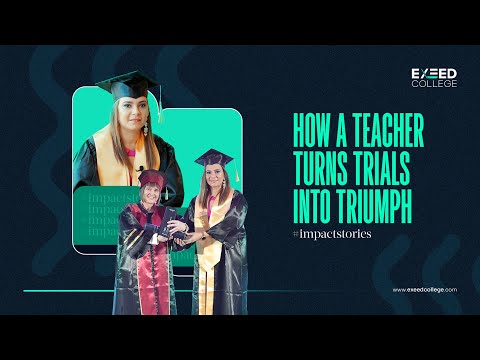
Hear from our graduates
Educators who took this path, in their own words.
 PGCEI
PGCEI India → UAE
 Master'sIndia → UAE
 PGCEI
PGCEI Bolivia → UAE
Meet your faculty
Learn from an experienced, international faculty of practitioner-scholars.






About Woolf University, Malta
Woolf University, Malta
Woolf is an accredited, degree-granting Higher Education Institution and is recognized within the European Higher Education Area (EHEA). There are 49 countries in the EHEA. Degrees issued in the EHEA are normally automatically recognized between all member countries, but final decisions are always made by the country, EHEA countries use a credit system called ECTS–the European Credit Transfer and Accumulation System.
The ECTS system is the most widely recognized form of accreditation in the world. Degrees with ECTS accreditation are normally automatically recognized by receiving institutions around the world, including Canada and the United States. Woolf issues degrees with ECTS accreditation.
Postgraduate Certificate in Education (AI in Education)
Issued and conferred by Woolf University, Malta on successful completion. Specimen shown for illustration — names and dates appear on the issued certificate.
How to qualify
Eligibility
What you'll need to applyApplicants must have attained the following qualifications:
- Bachelor’s Degree from a recognized University
Documents needed
What to send with your application
How you'll learn
A flexible, mentor-led online experience — built so busy educators can upskill without a career break.
- Live & interactive lectures by expert faculty
- Recorded sessions for offline viewing
- World-class curriculum by eminent faculty
- Practical learning through seminars & workshops
- Assignments for module assessments
- Easy-to-use LMS, accessible anywhere
- Online library to further enhance your knowledge
- Real-world skills for a well-rounded experience
Where this qualification takes you
Continue your journey
Lead reform and policy with research-driven doctoral study.
 Malta
MaltaLead reform and policy with research-driven doctoral study.
MaltaLead reform and policy with research-driven doctoral study.
 Spain
SpainFrequently asked questions
A Postgraduate Certificate in Education (AI in Education) awarded by Woolf University, Malta. The six-month, fully online programme gives educators foundational and advanced knowledge of artificial intelligence in teaching: instructional design and assessment with AI tools, ethical and responsible use, and approaches such as AR, VR, machine learning and natural language processing.
Six months, studied fully online, worth 30 ECTS. The programme is made up of six modules of 5 ECTS each, delivered through live sessions, assessments, self-directed study and interactive tasks. Intakes are on request, so an advisor can confirm the current start dates.
Six modules of 5 ECTS: Foundations of AI in Education; Generative AI in Education; Curriculum and Instruction; Community-Based Pedagogy; Designing AI-Integrated Instruction, Curriculum and Assessment; and Leadership Development. Between them they cover AI principles and ethics, prompt engineering and GenAI tools, backward design, inclusive assessment, community partnerships and leading change.
A bachelor's degree from a recognised university. With your application you send a completed application form, your diploma and bachelor's degree with transcripts, a CV, a copy of your passport, a photograph, a statement of purpose and an experience or employment letter. Advisors can confirm your eligibility first.
The only academic requirement listed is a bachelor's degree from a recognised university; no computing background is specified. The programme opens with Foundations of AI in Education, which covers AI's principles, evolution, societal impact and ethical challenges before you move on to applied work with tools such as ChatGPT, AR and VR.
Fully online, with live sessions, assessments, self-directed study and interactive tasks. Taito adds live interactive lectures with faculty, recorded sessions for offline viewing, seminars and workshops, module assignments, an easy-to-use learning platform and an online library, so educators can study without a career break.
Woolf University, Malta, awards this qualification. The award is the Postgraduate Certificate in Education (AI in Education), issued and conferred by the university on successful completion of the six-month programme. Speak to an advisor about how the certificate fits your own plans.