
 Awarded byGuglielmo Marconi University
Master of Education in Special Education
A one-year, fully online Master's in Special Education — inclusive practice, individualised planning and evidence-based intervention.
Program Overview
This one-year online programme equips educators with the knowledge and skills to support learners with diverse needs, promoting inclusive education and personalised learning approaches. You will explore how to assess, plan, and implement strategies that enable all students to reach their full potential.
The curriculum covers areas such as differentiated instruction, behavioural support, curriculum adaptation, and evidence-based intervention methods. Learners gain practical tools to respond to a wide range of learning differences in real classroom settings.
Graduates are prepared to lead inclusive initiatives, design supportive learning environments, and advocate for equitable educational opportunities in schools and other educational contexts.
Who is it for?
- Practising teachers moving into leadership
- Education professionals broadening their expertise
- Graduates entering the education sector
- Those seeking a pathway to doctoral study
What each module covers
Expand any module to read its description and intended learning outcomes.
Module Description
This module provides a critical exploration of the historical, philosophical, and sociological foundations of education and their influence on contemporary educational systems. Students examine classical and modern educational theories, analyzing their relevance, strengths, and limitations in shaping current practices in curriculum, pedagogy, and policy. The module encourages critical reflection on key educational debates, including equity, social justice, and the purpose of education in a rapidly changing global context. Emphasis is placed on connecting theory to practice, enabling students to design research-informed interventions that address complex educational challenges and contribute to the development of effective and inclusive educational practices.
Learning Outcomes
At the end of the module, the students should be able to:
- LO1Demonstrate a critical understanding of the historical, philosophical, and sociological foundations of education, and analyze how these ideas shape and influence the current and future state of the educational system.
- LO2Critique contemporary educational theories by examining existing models together with their strengths and weaknesses that influence the educational system today.
- LO3Critically evaluate classical and modern educational perspectives to construct rational arguments on the current issues in curriculum, pedagogy, and social justice in education.
- LO4Design practical, research informed interventions developed from foundational and contemporary educational thought that address complex educational challenges today.
Module Description
This module equips students with advanced understanding of governance structures, policy processes, and strategic leadership within complex education systems. It examines the regulatory environment, institutional governance models, and policy formulation and implementation mechanisms that shape educational practice and performance. The module develops strategic leadership capability for driving institutional effectiveness, managing risk, ensuring accountability, and leading systemic reform. Emphasis is placed on ethical governance, stakeholder engagement, and evidence-based decision-making to strengthen student experience, and enhance school, family and community partnerships.
Learning Outcomes
At the end of the module, the students should be able to:
- LO1Critically evaluate different leadership approaches for institutional effectiveness and school reform.
- LO2Critically analyze governance frameworks and regulatory structures governing education systems globally.
- LO3Critically review education policy in institutional and professional contexts.
- LO4Design research-informed strategies to enhance school, family and community partnerships.
Module Description
This module develops capability in understanding, designing, and applying generative artificial intelligence within contemporary education systems. It examines the principles, architectures, and pedagogical applications of generative AI technologies, including large language models across teaching, assessment, student support, and institutional operations. Students critically evaluate the transformative potential, governance implications, and ethical dimensions of generative AI adoption. The module positions graduates to lead responsible AI integration initiatives, design AI-enabled learning solutions, and shape institutional strategies that enhance educational quality, innovation capacity, and organizational performance.
Learning Outcomes
At the end of the module, the students should be able to:
- LO1Critically analyze the principles, capabilities, and limitations of generative AI technologies in educational contexts.
- LO2Critically evaluate pedagogical and organizational use cases of generative AI across teaching, assessment, and student support.
- LO3Critically assess the ethical, legal, and governance implications of generative AI adoption in education.
- LO4Design a generative AI–enabled educational solution that addresses an identified teaching, learning, or institutional challenge within responsible AI and governance frameworks.
Module Description
This module develops competence in research design, methodology, and scholarly inquiry within educational contexts. It equips students with the theoretical foundations and practical skills required to conceptualize, design, and conduct rigorous educational research aligned with professional practice and policy priorities. The module examines qualitative, quantitative, and mixed-methods approaches, research ethics, data analysis strategies, and academic writing conventions. Emphasis is placed on problem formulation, methodological alignment, and evidence-based decision-making to prepare students for independent dissertation research.
Learning Outcomes
At the end of the module, the students should be able to:
- LO1Critically evaluate research paradigms and methodological approaches in educational inquiry.
- LO2Formulate research problems, questions, and conceptual frameworks relevant to educational practice and policy.
- LO3Design rigorous research methodologies aligned with ethical and quality standards.
- LO4Apply appropriate data collection, analysis, and academic reporting techniques in preparation for the master’s dissertation.
Module Description
This module develops advanced understanding of teaching and learning approaches for students with diverse abilities within inclusive educational settings. It examines how learning theories and environmental factors influence the needs of students with diverse needs, enabling educators to design effective, individualized instructional strategies. Students critically evaluate evidence-based practices, intervention models, and assistive technologies that support inclusive and equitable learning outcomes. The module emphasizes differentiated instruction, positive behaviour support, and student-centred approaches. Through applied learning, students develop the capability to design and implement individualized education plans and collaborative support frameworks to address complex student needs.
Learning Outcomes
At the end of the module, the students should be able to:
- LO1Critically analyze the different learning theories and environmental factors influencing the learning needs of students with diverse disabilities to inform individualized instructional strategies.
- LO2Critically evaluate evidence-based instructional approaches and practices, assistive technologies, and intervention models in special education, and examine how they help in attaining inclusive and equitable learning outcomes.
- LO3Apply principles of differentiated instruction, promoting positive behavior that will aid in designing and implementing student centered teaching strategies for students with diverse learning needs.
- LO4Develop comprehensive individualized education plans (IEPs) or support frameworks that integrate assessment data, multidisciplinary collaboration, and research based practices to address complex student needs.
Module Description
The Dissertation module represents the capstone of the programme and provides students with the opportunity to demonstrate advanced academic, professional, and research capability through independent scholarly inquiry. This module enables students to investigate a significant issue, challenge, or innovation within an educational context, drawing on theoretical frameworks, empirical evidence, and professional practice to generate meaningful insights and applied solutions. Building on the foundations established in the Educational Research Design module, students are supported to design and execute a rigorous research project aligned with ethical standards, institutional research governance, and quality assurance expectations. Students may adopt qualitative, quantitative, or mixed-methods approaches, depending on the nature of their research question and professional context. The dissertation encourages critical engagement with contemporary literature, robust methodological justification, and systematic data analysis to ensure academic credibility and relevance. On completion, students produce a substantial, original dissertation that demonstrates intellectual independence, critical insight, and the ability to contribute to professional practice and knowledge development within the field of education. The Dissertation module consolidates the programme’s emphasis on strategic thinking, research-informed leadership, and professional impact, positioning graduates to influence educational practice, policy, and innovation at institutional and system levels.
Hear from our graduates
Educators who took this path, in their own words.
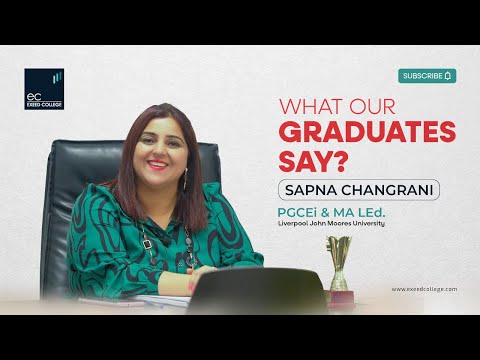 PGCEI
PGCEI India → UAE
 Master's
 South Africa → UAE
 Master'sIndia → UAE
Meet your faculty
Learn from an experienced, international faculty of practitioner-scholars.






About Guglielmo Marconi University, Italy
Guglielmo Marconi University, Italy
Università degli Studi Guglielmo Marconi, internationally referred to as Guglielmo Marconi University, is the first Italian Open University recognised by the Italian Ministry of Education, University and Research (MIUR).
Guglielmo Marconi University (GMU) promotes the use of innovative learning methodologies and an approach based on the development of interdisciplinary knowledge, skills, and competencies with a particular emphasis on the global perspective. Its diverse community currently has 16,000 students enrolled in graduate and postgraduate programmes, 300 faculty members, and an academic advising team made of more than 200 experts.
Master of Education in Special Education
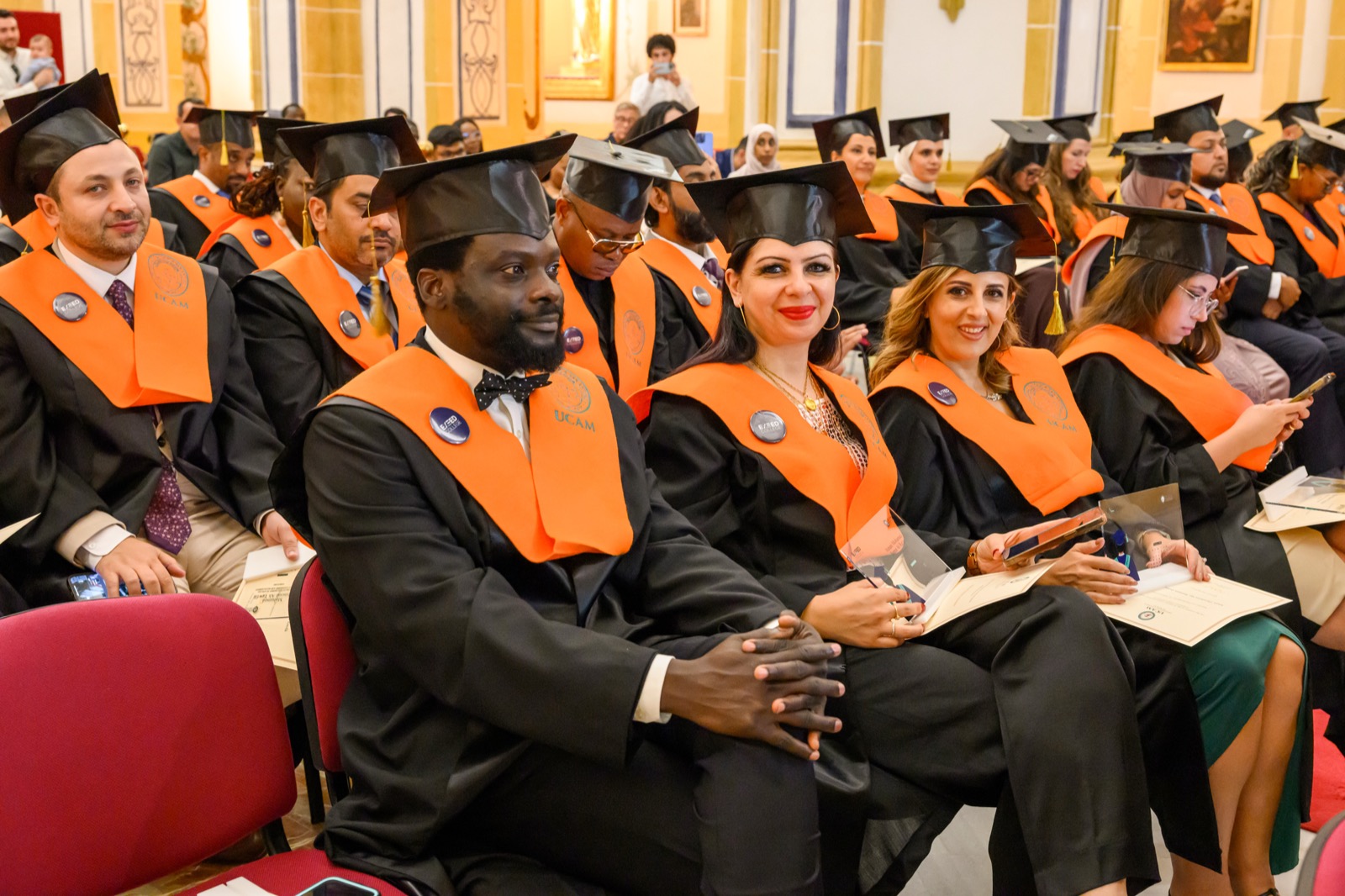
Issued and conferred by Guglielmo Marconi University, Italy on successful completion. Specimen shown for illustration — names and dates appear on the issued certificate.
How to qualify
Eligibility
What you'll need to apply- Bachelor’s Degree from a recognised university
How you'll learn
A flexible, mentor-led online experience — built so busy educators can upskill without a career break.
- Live & interactive lectures by expert faculty
- Recorded sessions for offline viewing
- World-class curriculum by eminent faculty
- Practical learning through seminars & workshops
- Assignments for module assessments
- Easy-to-use LMS, accessible anywhere
- Online library to further enhance your knowledge
- Real-world skills for a well-rounded experience
Where this qualification takes you
Continue your journey
Lead reform and policy with research-driven doctoral study.
 Italy
ItalyLead reform and policy with research-driven doctoral study.
ItalyLead reform and policy with research-driven doctoral study.
ItalyFrequently asked questions
It is a one-year online master's that prepares educators to support learners with diverse needs. It covers how to assess, plan and implement strategies through differentiated instruction, behavioural support, curriculum adaptation and evidence-based intervention methods, so teachers can respond to a range of learning differences. It carries 60 ECTS credits.
Master of Education. The full award title is Master of Education in Special Education, a 60 ECTS qualification studied over one year. The Ed marks the subject of the degree, education, in the same way as in other MEd titles such as Master of Education in Early Childhood Education.
One year, studied fully online. Five taught modules lead to a 12 ECTS dissertation, making 60 ECTS. Live interactive lectures are recorded for offline viewing, and there are seminars, workshops, assignments for module assessments and an online library. Advisors confirm intake dates when you apply.
A bachelor's degree from a recognised university. The page describes the programme as suiting practising teachers moving into leadership, education professionals broadening their expertise, graduates entering the sector and those seeking a pathway to doctoral study. Advisors can confirm your eligibility before you apply.
Teaching and learning for special education, worth 8 ECTS, covers teaching approaches for students with diverse abilities in inclusive settings. It examines evidence-based practices, intervention models and assistive technologies, and emphasises differentiated instruction, positive behaviour support and the design of individualised education plans and collaborative support frameworks.
Foundations of education and contemporary educational thought (10 ECTS), governance, policy and strategic leadership in education (10), generative AI in education (10), research methods in education (10), teaching and learning for special education (8), and a dissertation (12), making 60 ECTS in total.
Guglielmo Marconi University, Italy. The award, titled Master of Education in Special Education and worth 60 ECTS, is issued and conferred by the university on successful completion. Taito delivers the programme online. Speak to an advisor about how the qualification fits your plans.